22 Eylül 2026
Sourcing Wholesale Silver Jewelry for an Etsy or Shopify Shop
How wholesale differs from dropshipping, why low MOQ matters for online testing, what Etsy sellers must check about disclosure, and how to plan a first test order.
Wholesale, dropshipping and print-on-demand are not the same thing
Anyone researching how to stock an Etsy or Shopify jewelry shop runs into three sourcing models that get talked about interchangeably, even though they work very differently.
Dropshipping means a supplier ships orders directly to your customer under your listing, and you never hold inventory. Print-on-demand is a version of the same idea for customizable items — a design is produced only once a customer orders it, often with your branding printed or engraved at the time of production. Wholesale is different from both: you place a bulk order with a manufacturer or supplier, pay for it upfront, receive the physical stock yourself, and then list and ship it to your own customers as your own inventory.
Wholesale generally gives you more control — over photography, over which specific pieces you stock, over pricing, and over how consistently a listing matches what actually ships — but it also means capital tied up in stock and a supplier relationship built around bulk orders rather than one-off drop-ship fulfillment. For a jewelry shop where finish, weight and photography quality matter to the buying decision, wholesale is usually the more workable model, which is why this guide focuses on it.
Why low MOQ matters when you're testing designs online
A physical boutique buyer often has a sense of what their local customers want before they order — foot traffic and repeat customers build that intuition over time. An online seller usually doesn't have that yet, especially in the first few months of a shop. What sells on Etsy or in a Shopify store is discovered through actual listings, actual traffic and actual conversion data, not guessed in advance.
That makes minimum order quantity (MOQ) a real constraint on how fast you can learn. If a supplier requires 50 or 100 pieces per design to place an order, testing ten designs to see which ones convert means committing to hundreds of units before you know which will sell. A lower MOQ — ours is 5 pieces per style — lets you spread a given budget across more designs, list more variety, and see what actually moves before committing heavier volume to the winners.
What an online seller needs from a supplier that a physical shop doesn't
A boutique buyer can inspect stock in person before it goes on a shelf. An online seller can't — the product photo, weight and description are the entire transaction until the item is physically in the customer's hands. That shifts what matters in a supplier relationship:
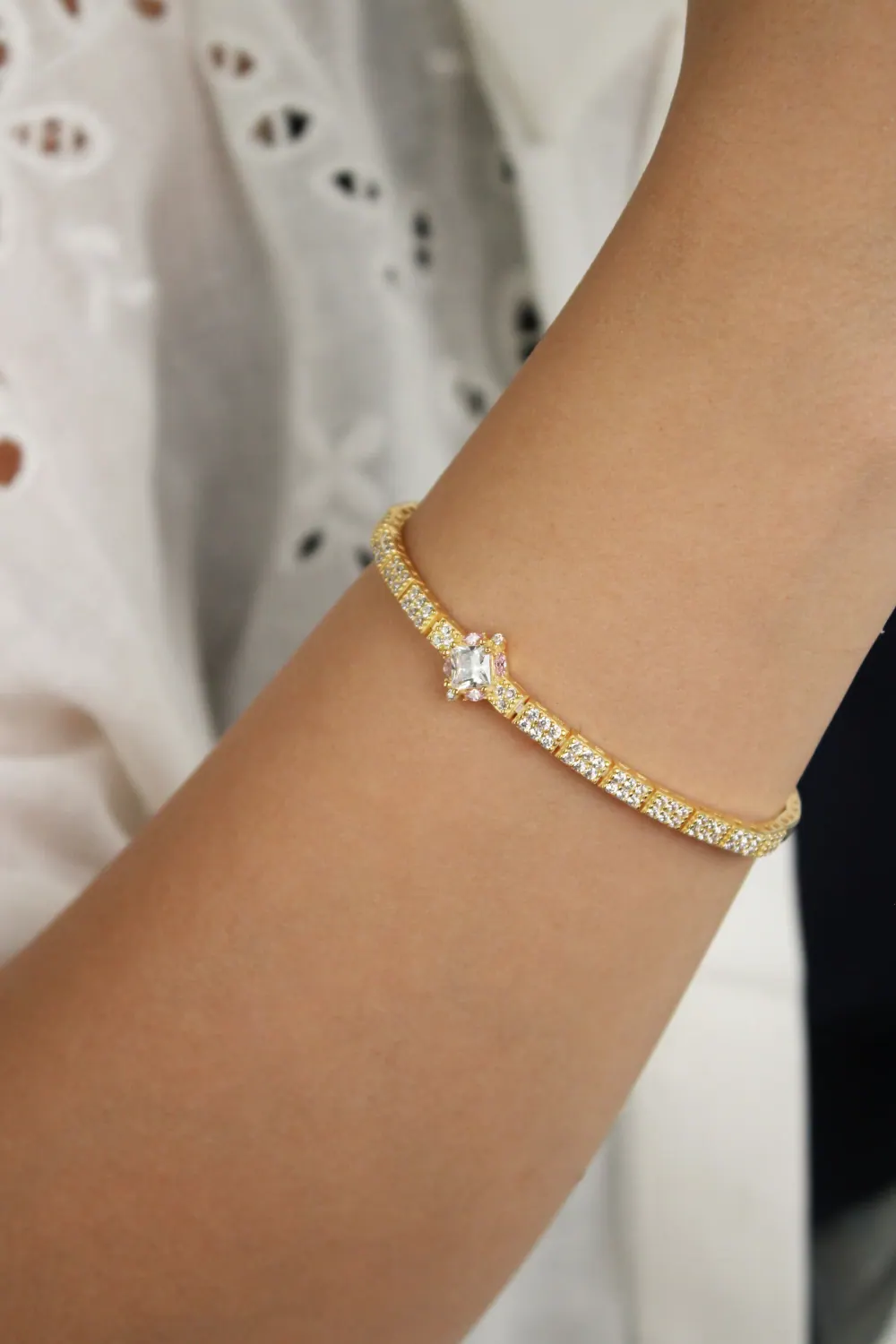
- Consistent, photography-friendly finishes. If a listing photo shows a bright rhodium finish and a reorder arrives visibly different, that inconsistency shows up as return requests and bad reviews on a platform where reviews matter directly to future sales.
- Repeatable restocks of the same SKU. A listing that's built up reviews and search ranking loses that history if you can't reorder the same design again. Ordering by SKU rather than a general description is what makes a reliable restock possible.
- Accurate weights for shipping calculations. Online listings usually charge shipping calculated from package weight, or build it into a flat listing price. A supplier that lists average weight per SKU lets you calculate shipping costs accurately before you ever list the item, rather than discovering your shipping estimate was off after the first few orders.
- Clear lead times, confirmed before you commit. Because most wholesale jewelry, including ours, is made to order rather than pulled from existing stock, production time needs to be confirmed at the time you place an order — factor that into how far in advance you order relative to when you plan to list.
What Etsy's own rules mean for a wholesale-sourced shop
If you're selling on Etsy specifically, be aware that Etsy has its own policies around what can be listed as handmade and what disclosure is required when a listing involves a production partner rather than being made entirely by the seller. These policies are platform rules, not general law, and Etsy updates them periodically — so rather than repeating a summary here that could be outdated by the time you read it, check Etsy's current seller policy directly before you list wholesale-sourced jewelry, to make sure your listings are structured and disclosed the way the platform currently requires. Shopify, by contrast, doesn't carry the same "handmade" framing — a Shopify store is simply your own storefront, so wholesale-sourced inventory lists the same way any retail product would.
Calculating a retail price from landed cost
Whichever platform you sell on, the number that should drive your price isn't the wholesale unit price alone — it's landed cost: the wholesale price plus freight, any import duty and tax, and platform or payment fees, divided across the units in your order. If you're sourcing from a supplier outside your own country, our guide on importing silver jewelry from Turkey walks through how duty, VAT and shipping add up to that number for UK and EU buyers specifically — the same landed-cost logic applies wherever you're importing to. Skipping duty and fees when pricing is one of the most common reasons a new shop's margin looks fine on paper and turns out thin once the real costs land.
Planning a first test order
Rather than ordering broadly across an entire catalogue, a narrow first order tends to teach you more per dollar spent. A reasonable structure is 3–4 categories — say, earrings, a pendant necklace style, and a couple of ring designs — with a small number of designs in each, and a mix of platings (rhodium, gold, rose gold) across those designs rather than committing to one finish before you know what your audience responds to. That gives you enough variety to compare what sells without spreading a first order too thin to draw any conclusion from it.
Photography and listing tips for made-to-order silver
Since a listing photo is doing all the selling work online, a few habits suit made-to-order sterling silver specifically:
- Shoot against a neutral, evenly lit background so the plating color (white rhodium, yellow gold, pink-toned rose gold) reads accurately — mismatched color between photo and product is a common source of return requests.
- Include a worn or scale shot alongside a clean product shot, since buyers can't hold the piece to judge size.
- List the actual weight in the description where the platform allows it — weight is a concrete, trust-building detail that a stock photo can't communicate.
- State plating and base metal plainly in the title or first line of the description (for example, "925 sterling silver, rhodium plated") rather than a vague term like "silver-tone," which search and buyers both respond to more directly.
When to reorder
Because made-to-order wholesale jewelry isn't pulled from a shelf, reordering a SKU that's selling means placing a new order with enough lead time to avoid a stockout — not waiting until you're down to your last unit. Tracking which SKUs are actually converting (not just which get views) and reordering those specifically, rather than reordering your whole original assortment evenly, is generally a better use of a second order's budget once you have a few weeks of real sales data.
How Ruvolla fits an online seller's sourcing
Our catalogue runs to roughly 2,400 designs across earrings, necklaces, rings, bracelets and more, each listed with a SKU, an average weight in grams, and plating options (14K gold, rhodium, rose gold) at a micron thickness chosen per order. MOQ is 5 pieces per style, which is built for exactly the kind of narrow, multi-design test order described above rather than requiring a large commitment per design. See the ordering process on our wholesale guide, browse necklaces and evil eye jewelry — a strong-performing category for online sellers — and check MOQ, payment and shipping specifics on the wholesale FAQ before you apply for a trade account.
Frequently asked questions
Where can I buy jewelry wholesale to resell on Etsy or Shopify?
Wholesale jewelry manufacturers and suppliers who sell to businesses, rather than consumer marketplaces, are the source for resale inventory. Look for a supplier with a defined trade account process, per-SKU details (material, weight, plating), and an MOQ low enough to test multiple designs without a large upfront commitment.
Do I have to disclose my supplier on Etsy?
Etsy has specific policies around handmade listings and production partner disclosure, and those policies are updated periodically. Rather than relying on a general summary, check Etsy's current seller policy directly before listing wholesale-sourced jewelry, so your listings meet whatever disclosure the platform currently requires.
How much wholesale jewelry should I order for my first Etsy or Shopify test batch?
A narrow assortment — a handful of designs across 3–4 categories, with a mix of platings — generally teaches you more about what your audience wants than a large order concentrated in one category or finish. You can scale up on the specific SKUs that convert once you have real sales data.
How do I price wholesale silver jewelry for an online store?
Start from landed cost, not the wholesale unit price — add freight, any import duty and tax, and platform or payment processing fees, then divide by the number of units. Apply your retail multiplier to that landed cost figure so your margin reflects your actual costs, not just what the supplier charged per piece.