21 Eylül 2026
Importing Silver Jewelry from Turkey: A Practical Guide for UK and EU Buyers
A practical guide for UK and EU buyers importing silver jewelry from Turkey: EXW vs DAP, customs paperwork, VAT, brokerage, and how to calculate landed cost.
Why this guide exists
Sourcing silver jewelry wholesale from a Turkish manufacturer is straightforward on the ordering side — browse a catalogue, request a proforma, pay, wait for production and shipping. What trips up first-time buyers is almost always what happens after the shipment leaves Istanbul: customs paperwork, duty, VAT, and who's actually responsible for each step. This guide covers that part, for buyers in the UK and EU, focusing on mechanics rather than specific rates — rates and thresholds change, and the only reliable source for a current figure is your own customs authority or courier.
This is general guidance, not legal or customs advice. Confirm anything rate- or classification-specific with your customs authority, a licensed broker, or your courier before you rely on it for pricing decisions.
Who is the importer of record: EXW vs DAP
The incoterm on your order determines who arranges transport, not who is legally responsible for the import. Under both EXW (Ex Works) and DAP (Delivered at Place), the buyer is the importer of record in their own country — responsible for the accuracy of the customs declaration and for paying any duty or VAT assessed at the border.
- Under EXW, the supplier's responsibility ends once goods are ready for collection in Istanbul. You (or a freight forwarder you appoint) arrange transport and clearance.
- Under DAP, the supplier arranges transport to your delivery address, but you're still the importer of record — the courier handles clearance on your behalf, but the duty, VAT and any brokerage fee are still yours to pay.
Buyers sometimes assume DAP means "the supplier handles customs" — it doesn't. It means the supplier gets the shipment to your door; the customs obligation stays with the buyer either way. Our shipping page covers which incoterms we quote and how transit typically runs.
What documents travel with a shipment
Customs clearance runs on paperwork, and the biggest cause of delay for jewelry shipments is a commercial invoice that's too vague to classify. A workable invoice states, at minimum:
- An accurate description of the goods — "sterling silver earrings, gold plated" rather than just "jewelry" or "accessories."
- Quantities and unit value, matching what's actually in the box.
- The HS (Harmonized System) tariff code, or enough detail for your broker or courier to assign one — this code is what customs uses to determine the applicable duty rate.
- Country of origin — for jewelry manufactured in Turkey, that's Turkey, regardless of where the raw silver itself was sourced.
A vague invoice is the most common reason a shipment gets held for manual review, which costs time even when nothing is wrong. Before your first order ships, confirm with your supplier exactly what will appear on the invoice and cross-check it against what you ordered.
The EU-Turkey customs union, in general terms
Turkey and the EU operate under a customs union arrangement that affects how many industrial goods move between them, and jewelry-adjacent goods can be affected depending on their classification. This is useful context, but not something to rely on for a specific duty outcome: whether a product qualifies for preferential treatment depends on its exact tariff classification and documentation, and generic summaries (including this one) shouldn't be used to predict your landed cost. If preferential treatment matters to your numbers, ask your broker or customs authority how it applies to your specific HS code — don't assume a rate from a general description of the customs union.
The UK, post-Brexit
Since the UK left the EU customs union, shipments from Turkey to the UK are cleared under the UK's own independent customs and tariff rules, separate from the EU's. UK buyers should confirm current UK import rules directly rather than assuming EU terms apply, and vice versa. The mechanism — declare, classify, assess duty and VAT — is stable; the specific rates and any preferential arrangements are exactly the kind of detail that changes and should be confirmed when you're ordering, not assumed from a guide.
VAT at import
In many countries, VAT (or the local equivalent — sales tax in some non-EU markets) is charged at import, calculated on the customs value plus duty and shipping, not just the product price. For businesses registered for VAT, that import VAT is often reclaimable as input tax on a normal VAT return — but the exact mechanism, and whether a scheme like postponed accounting applies, depends on your country's rules. Confirm this with your accountant or tax authority rather than assuming it works the same as your last purchase.
The practical takeaway: import VAT is a cash-flow item even when it's reclaimable, since you (or your courier, who invoices you) typically pay it before you can reclaim it on your next return.
Courier brokerage vs. your own broker
For jewelry-weight wholesale shipments, DHL Express and UPS are the couriers most commonly used, and both offer built-in customs brokerage — they clear the shipment on your behalf and bill you for duty, VAT and a brokerage fee, usually before or on delivery. This is the simplest path for most buyers, particularly on a first order.
Buyers importing regularly at higher volume sometimes appoint their own customs broker instead, for more control over classification and documentation and sometimes a lower fee at scale. For a first order, courier brokerage is generally the simpler choice — you can move to your own broker later if volume justifies it.
Calculating landed cost properly
The number that should drive your retail pricing is landed cost, not the invoice price from your supplier. A full landed cost calculation includes:
- Product cost — the wholesale price per piece, including any plating and micron choice.
- Freight — the courier charge to move the shipment from Istanbul to your address.
- Duty — assessed on the customs value at the applicable rate for your goods' HS code and destination.
- VAT or local sales tax — assessed at import, per your country's rules.
- Brokerage fee — whether charged by your courier or a separate broker.
Add these together and divide by the number of pieces to get a true per-piece landed cost. Apply your retail multiplier — commonly 2x to 3x for jewelry, adjusted for your market — to that figure, not the wholesale price alone. Skipping duty and VAT here is one of the most common ways new buyers under-price their first collection and discover the margin problem only after the goods have sold.
Sizing your first order to test the whole chain
A first wholesale order from a new country isn't just a product decision — it's a test of the entire chain: supplier communication, production and shipping timing, customs clearance, and your own landed-cost math. It's worth sizing that first order deliberately rather than maximizing it: enough pieces across enough categories to be worth the shipping and clearance overhead, but not so large that a paperwork issue or pricing miscalculation becomes a serious problem while you're still learning how the process behaves.
Once a first order has cleared cleanly and you understand your actual landed cost and clearance timing, scaling the next order up is a lower-risk decision than guessing at product-market fit and import mechanics at the same time.
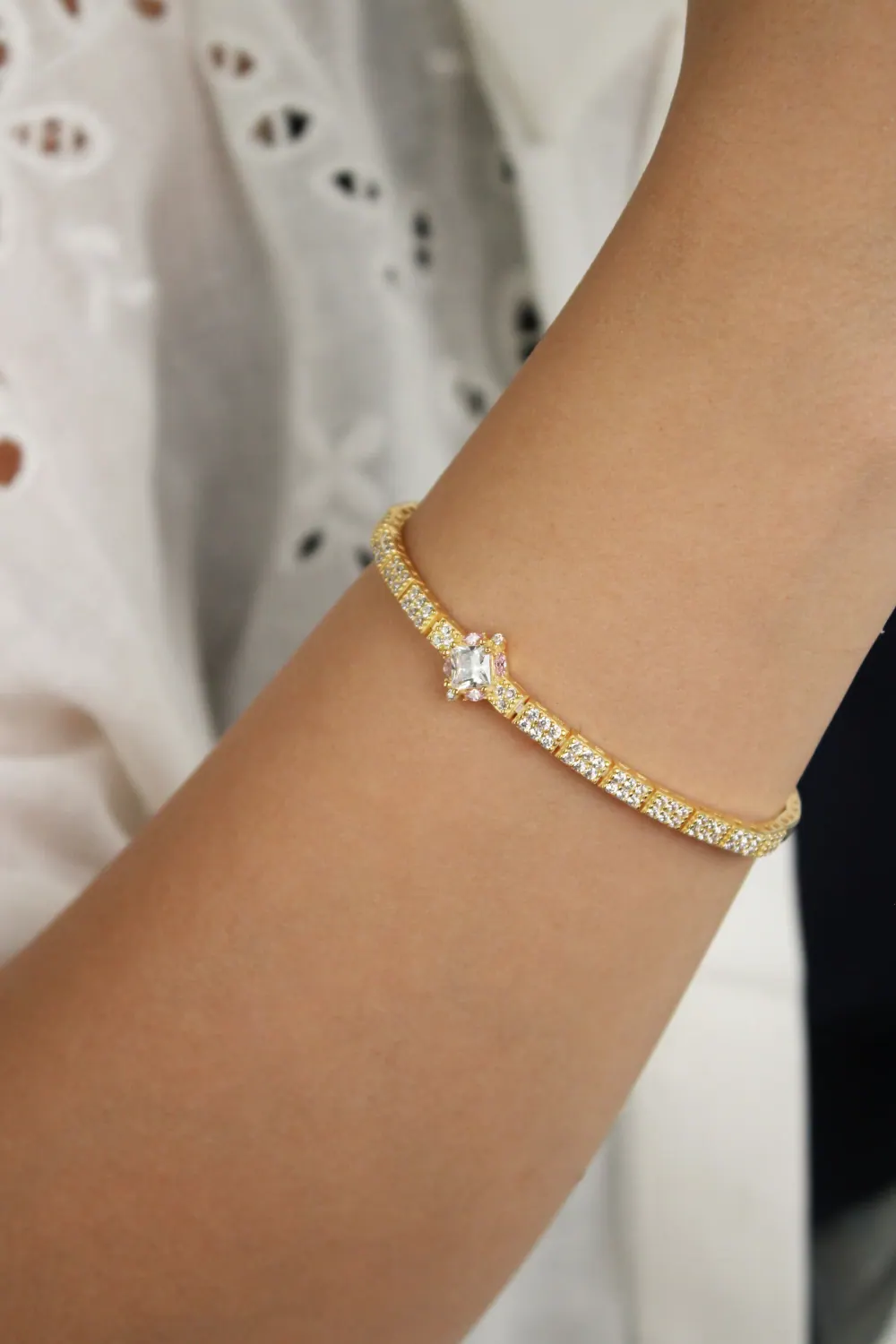
If you're ready to start, our wholesale guide explains the ordering process from account approval through proforma, the wholesale FAQ covers MOQ and payment specifics, and you can browse the motifs and bracelets ranges before you apply for a trade account.
Frequently asked questions
Who is responsible for customs when importing jewelry from Turkey?
The buyer is the importer of record in their own country under both EXW and DAP terms. Under DAP, the courier typically handles the clearance process on the buyer's behalf, but the buyer still pays any duty, VAT and brokerage fee assessed, and is responsible for the accuracy of the customs declaration.
Do I pay import duty on jewelry from Turkey to the UK or EU?
In most cases, yes, some combination of duty and VAT applies at import — but the exact rate depends on the goods' tariff classification, your destination country's current rules, and in some cases the Turkey-EU customs union framework. Rates and thresholds change, so confirm the current figures with your customs authority, broker or courier rather than relying on a fixed number.
Should I use my courier's customs brokerage or hire my own broker?
For most first-time and moderate-volume buyers, courier brokerage (through DHL Express or UPS, for example) is simpler and requires no separate relationship — the courier clears the shipment and bills you directly. Buyers importing at higher volume sometimes move to their own broker for more control over classification, but that's usually a decision made after you have some import history, not before your first order.
How do I calculate the real cost of a wholesale jewelry order from Turkey?
Add the product cost, freight, duty, VAT (or local sales tax) and any brokerage fee together, then divide by the number of pieces to get your true landed cost per item. Apply your retail multiplier to that landed cost, not to the wholesale invoice price alone — otherwise duty and VAT quietly erode the margin you thought you had.