22 Eylül 2026
Rhodium Plated Sterling Silver: What Retailers Should Know
What rhodium plating is, how it differs from gold plating in look and wear, how micron thickness affects longevity, and how to split a wholesale order across finishes.
Why rhodium plating comes up so often in silver jewelry
If you've bought sterling silver jewelry wholesale for any length of time, you've seen "rhodium plated" listed next to gold plated and rose gold plated as a finish option. It's not a marketing term — it's a specific metal, applied for specific reasons, and understanding what it does helps you decide which finish to stock and what to tell a customer who asks why one piece looks brighter and whiter than another.
This guide covers what rhodium is, why sterling silver gets plated with it, how it compares to gold plating in look and in how it wears, and how a wholesale buyer should think about splitting an order across finishes.
What rhodium actually is
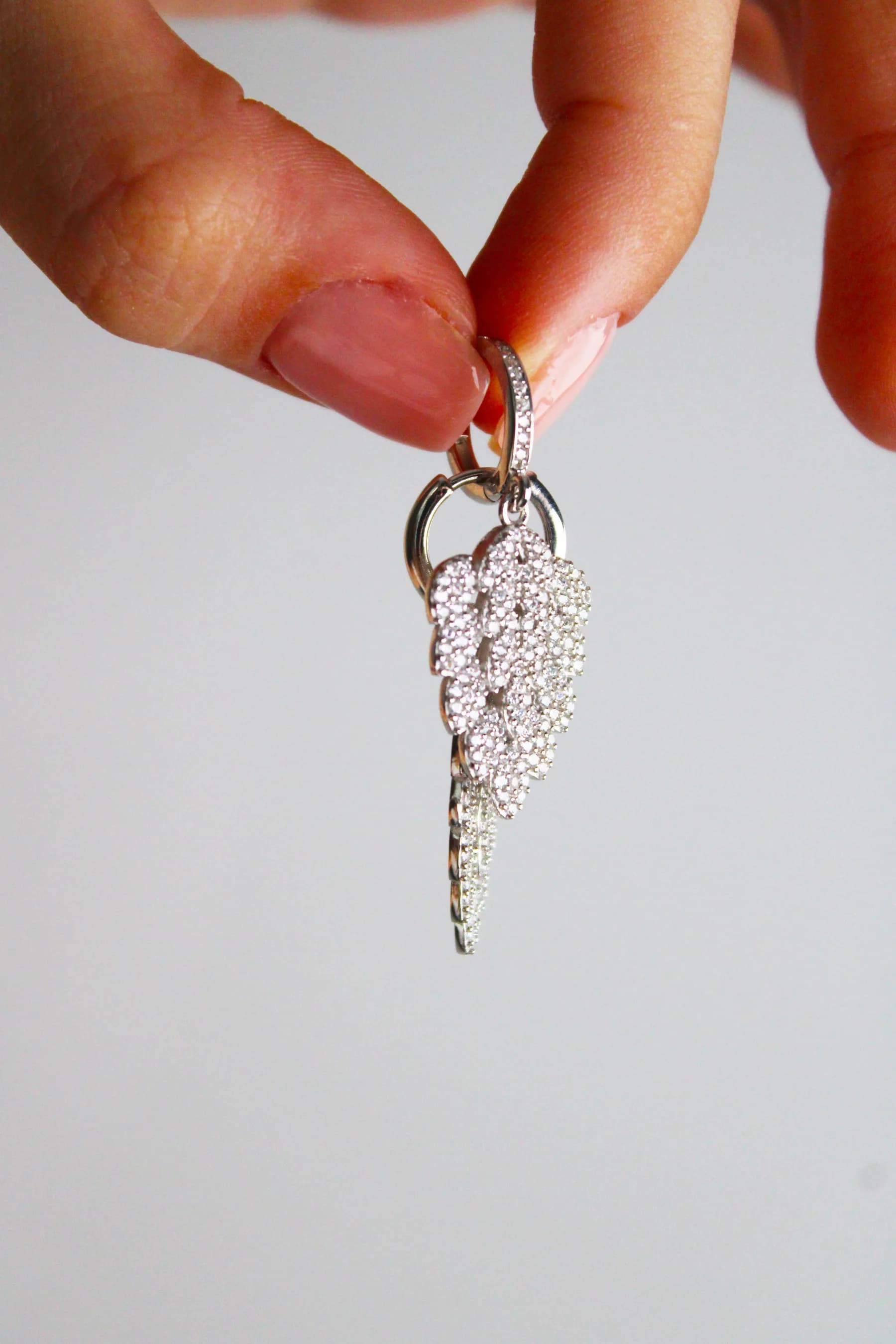
Rhodium is a platinum-group metal — rare, hard, and naturally bright white with a slightly cooler tone than polished silver. It's the same family of metal used in catalytic converters and in some high-end watch components, valued in jewelry specifically for its hardness and its reflective, almost mirror-like finish.
In jewelry manufacturing, rhodium isn't cast into a piece the way silver or gold is. It's applied as a thin surface layer through electroplating — the same general process used for gold plating — over a base metal, in this case 925 sterling silver.
Why sterling silver gets plated with rhodium
Sterling silver on its own has a slightly warmer, softer white tone than rhodium, and — because of the copper content that gives sterling silver its strength — it tarnishes over time when exposed to air and moisture. Rhodium plating addresses both of those points at once: it gives the piece a brighter, whiter finish than bare sterling silver, and because rhodium itself doesn't tarnish, a rhodium-plated surface slows the tarnishing that would otherwise show through on plain silver.
It also adds a layer of hardness to the surface. Rhodium is harder than sterling silver, so a plated surface resists surface scratching a little better than bare silver does, at least while the plating layer is intact.
This is why rhodium plating is common on pieces with stones set close to the metal — cubic zirconia settings in particular — where a bright, white, low-tarnish surface makes the stone read as cleaner and whiter to the eye.
Rhodium plating vs gold plating: look and wear
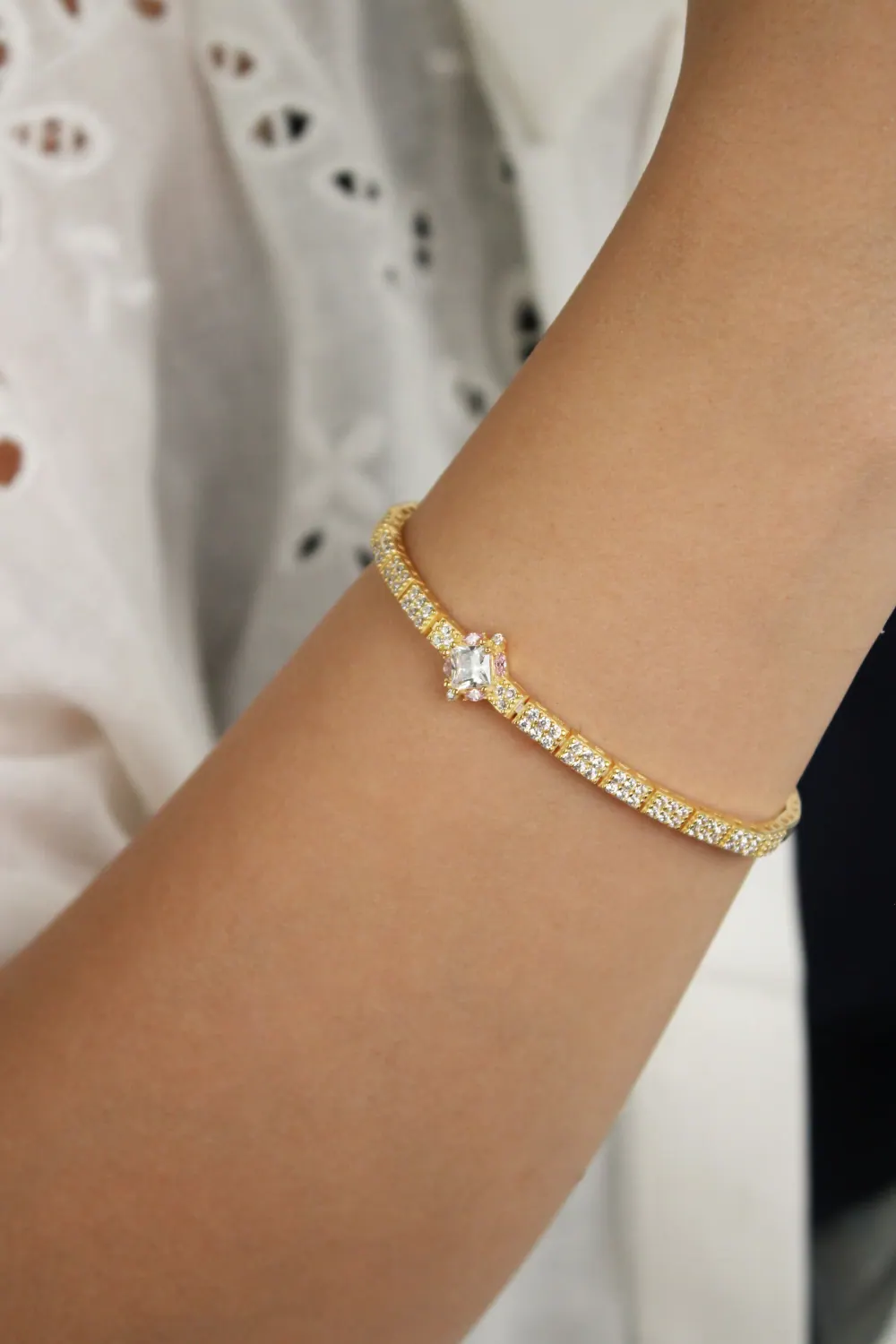
The visual difference is the easiest part: rhodium gives a bright, cool white finish, while gold plating (14K in our case) gives a warm yellow tone, and rose gold plating gives a warm pink-toned finish. A retailer deciding between the three for a given design is largely making a color and styling decision — rhodium tends to suit pieces styled for a "white gold" or platinum look, while gold and rose gold plating suit warmer, more traditional gold styling.
Where the two diverge more is in how wear shows. Because both are thin surface layers over the same base metal, both eventually show wear at contact points — the inside of a ring band, the back of an earring post, the clasp area of a bracelet — as the plating thins from repeated contact with skin, clothing and other jewelry. On a gold-plated piece, that wear typically shows as a shift toward the cooler tone of the silver underneath, which reads as a visible color change against the warm gold. On a rhodium-plated piece, the color shift is more subtle, since sterling silver is already a white-toned metal — worn rhodium can look slightly less bright or slightly warmer than a fresh rhodium surface, but it's a smaller visual jump than gold plating wearing through.
Neither finish is more "permanent" than the other. Both are surface layers, and both wear the same way structurally — through friction at contact points, not through the whole piece degrading evenly.
Plating is a surface layer — and it can be re-plated
It's worth being direct with retail customers about this: any plated finish, rhodium included, is a surface treatment over the base metal, not a solid-through material. Over time and with regular wear, the plating at contact points thins and can eventually reveal the sterling silver underneath. That's normal behavior for plated jewelry generally, not a defect specific to one finish or one supplier.
When a plated surface does wear through, a jeweler can typically re-plate the piece — stripping the worn layer and applying a fresh one — which is a standard jewelry repair service in most markets, not something unique to any particular brand of jewelry. Letting customers know this upfront, rather than only when they come back asking why a ring looks different after a year, tends to reduce complaints and returns.
How micron thickness changes how long plating lasts
The thickness of the plating layer, measured in microns, is the main variable that determines how long a finish holds up before wear starts to show. A thicker layer takes longer for everyday friction to wear through than a thinner one, all else being equal. This is true for rhodium plating the same way it's true for gold plating — thickness, not the metal itself, is what drives longevity at the surface.
We've written a full breakdown of how micron thickness works and what different thicknesses mean in practice in our gold plating and micron guide — the same logic applies whether the surface layer is gold, rose gold or rhodium. If you're deciding how much micron thickness to specify for a wholesale order, that's the place to start.
Which product types benefit most from a harder finish
Not every piece in a catalogue experiences the same amount of friction. Rings and bracelets sit at the high-friction end — a ring is in constant contact with other objects throughout the day, and a bracelet moves against a wrist, clothing and sometimes other bracelets stacked next to it. These categories tend to show plating wear soonest, and are the categories where a buyer might reasonably choose a heavier micron thickness if longevity matters to their customer base.
Earrings and pendants sit at the lower-friction end. They're not gripped, rubbed against surfaces or stacked against other metal the way rings and bracelets are, so plating on these categories tends to hold its finish longer under normal wear, even at a lighter micron thickness.
This isn't a reason to skip rhodium (or gold) plating on rings and bracelets — it's a reason to think about micron thickness deliberately for those categories rather than defaulting to the lightest option across the board.
What to tell a retail customer about care
A short, honest care note goes further than a warranty claim. The basics that apply to any plated sterling silver piece, rhodium included:
- Take jewelry off before swimming, showering or applying lotion and perfume — moisture and chemicals accelerate wear on any plated surface.
- Store pieces separately, ideally in a soft pouch, so they don't rub against other jewelry and wear the plating faster.
- Expect gradual change at contact points over time — that's normal for plated jewelry, not a fault.
- A jeweler can typically re-plate a piece once the original finish has worn down.
How to split a wholesale order across finishes
If you don't yet know which finish your specific market prefers — and most new sellers don't, until they have sales data — the practical approach is to order a mixed first batch rather than committing entirely to one finish. A split across rhodium, gold and rose gold plating on the same handful of designs lets you see which finish actually sells before you commit heavier volume to one direction. Because plating and micron thickness are chosen per order rather than fixed to a design, this kind of split is straightforward to specify on a single wholesale order rather than requiring separate purchases.
How Ruvolla handles plating and finish choice
Every design in our catalogue can be ordered in 14K gold, rhodium or rose gold plating, at a micron thickness you choose per order — 0.10, 0.20, 0.25, 1.00, 2.00 or 2.50 micron — with pricing calculated by the piece's weight rather than fixed per finish. That means the same ring or bracelet design can be split across finishes and micron thicknesses within a single order, which is useful for exactly the kind of first-order testing described above. Browse the rings and bracelets collections to see the range, check our plating and quality page for the full finish and micron breakdown, and see MOQ and ordering details on the wholesale FAQ before you apply for a trade account.
Frequently asked questions
Is rhodium plated sterling silver good quality?
Yes — rhodium plated sterling silver is genuine 925 sterling silver with a rhodium surface layer applied for a brighter white finish and better tarnish resistance. Quality depends on the base metal (925 sterling silver) and the plating thickness, not on rhodium being a lesser or lower-grade finish than gold plating; the two suit different looks rather than different quality tiers.
Does rhodium plating wear off?
Yes, like any plated finish, rhodium is a thin surface layer that wears at contact points with regular use — most noticeably on rings and bracelets. How long it takes to show depends mainly on micron thickness. A worn rhodium surface can typically be re-plated by a jeweler.
What is the difference between rhodium plating and gold plating on silver?
Both are thin metal layers applied over 925 sterling silver, but they produce different colors — rhodium gives a bright, cool white finish, while gold plating gives a warm yellow tone. They wear the same way structurally, through friction at contact points, but a worn gold-plated piece shows a more visible color shift than a worn rhodium-plated piece, since the base metal underneath is already white-toned.
Should I order one finish or a mix for my first wholesale order?
If you don't yet have sales data on what your customers prefer, ordering a mix of finishes across the same designs is generally more useful than committing to one. Since plating and micron thickness are chosen per order, a split across rhodium, gold and rose gold on a handful of designs is a practical way to test preference before scaling a single finish.